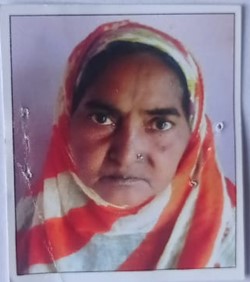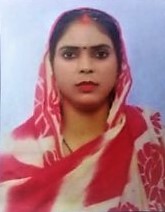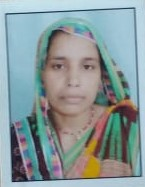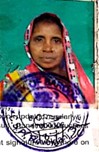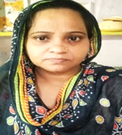
Chand Kausar

Chand was introduced to Manual Scavenging at a very young age due to the poor financial condition of her family. She continued working as a Manual Scavenger after her marriage at the age of 20 yrs. Currently, she resides in Mubarkbadpur with her husband Md. Kamleem, and three children, a son (13yrs old) and two daughters (10 & 12 yrs respectively).

Chand earns Rs 400/- per month which is insufficient for daily necessities and kids’ education. She had to withdraw her kids from school during COVID lockdown due to lack of work. She tried to come out of this inhuman activity of Manual Scavenging and work as a house help but was denied the opportunity due to social stigma.

She wants her kids to continue their education so they can do decent jobs and break the cycle of humiliation and discrimination that has been a constant part of her family’s life.

The Grant can help her pay for school fees and secure her kids’ future away from Manual Scavenging.
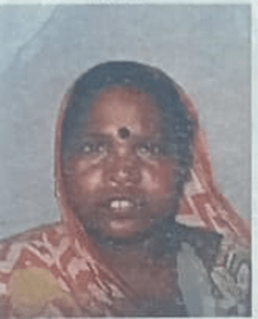
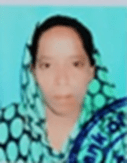
Juguni Hadhi

Jugni resides at Dhanbad with her husband, Aklu Hadhi, and their son, Sunil. Jugni’s husband and In-laws were manual scavengers. After her In-laws died, Jugni joined her husband in manual scavenging to support the household and raise her three children. She has been doing this inhumane activity for 22 years to support necessities and primary education for the kids. Over time it became difficult to fulfill necessities or support higher education for kids.

Her youngest child, Sunil, lives with her and works as a Safai Karamchari. Her oldest and middle children, Khusboo and Parwati, are married. Manual scavenging brought health complications for Jugni along with social stigma, she tried to come out of this inhuman activity and work as house help but due to social stigma, she was denied the opportunity several times.  

In early 2022 she was diagnosed with a tumor in her stomach and was advised not to practice manual scavenging to avoid any further complications. With all medical expenses and only two earning members it has been a difficult year for the household.  

Even though she and her family face discrimination in society, once she is medically fit to work, she would like to work in school as a cleaning staff to support her family.

She hopes to support her family’s financial requirements with Grant that will be provided and wishes to live without discrimination.

Jareena Bano

Jareena Bano Resides in Tanda Uttar Pradesh with her husband Md. Hasan and five daughters’ the eldest 21yrs old and the youngest 9yrs old. Jarrena has four siblings two brothers and two sisters. Her father and two brothers worked in Nagar Palika and supported the family. Jarrena never worked before marriage. Due to lack of importance given to girls’ education, Jareena dropped out of school after completing her primary education.

After her marriage, she started working as a manual scavenger as her In-laws and husband were involved in this work also, the financial condition of the family was not good. It’s been 20yrs since her marriage that she has been part of this inhuman practice.

Currently, Jareena is the only one earning and is not able to support education for her daughters. She doesn’t want her daughters to be part of manual scavenging and needs any form of support possible.

She wishes for her daughters to marry in a family that can support them financially, so they don’t face the same fate as her.

She will use the grant provided for day-to-day necessities for her family.

Krishna Devi

Krishna lives in Meerut with her 4 children and has been working as a manual scavenger for the past 30 years. Krishna was forced into manual scavenging after her marriage to Rajpal. The women in Rajpal’s family have been working as manual scavengers for many generations.

Krishna struggled to adapt to the nature of this work; the working conditions and abuse from her husband affected her health. She tried to get out of this work, but after her youngest son was born, her husband left her, and she had no other option but to continue working to support her family.

Krishna has seven children, among them her three daughters. Ranjita is the eldest who completed her primary education and lives in Delhi with her husband and three kids. Deepa, the second daughter, is mentally challenged and lives with Krishna, Pooja; the third daughter completed her MBA after marriage and works in a private firm.

Among her 4 sons, Vijay is married and lives with his wife and a 1-year-old kid near Meerut. He works as a daily wage worker. Karan is currently pursuing B-Pharma, Rahul has completed his secondary education and Harsh has completed higher education. All three live with Krishna and earn wages when they get the opportunity to work on a contractual job.

Though Krishan has always dreamt of coming out of this inhuman activity, her financial condition and lack of skills have always stopped her from achieving it, but even after pressure from her in-laws, she did not allow any of her kids to be part of this inhuman activity. With a minimum income of 4000 /- per month and support of a few more thousand from contractual work that her sons can acquire, she runs her household.

From the grant provided by Utopia Foundation, she hopes to fulfil basic requirements for her family.

Ranjana Bharati

Ranjana lives with her husband Shri Kallu and two kids in Lucknow, Uttar Pradesh. She has worked as a manual scavenger for nearly 10 years in Thakur Ganj and her husband works as a private Safai Karamchari.

Ranjana and her family are unhappy with the nature of her work and the discrimination they face. Although she has tried several times to break out of this inhuman practice, but has faced challenges due to caste discrimination, lack of education, inadequate skills, and financial constraints.

Ranjana manages all essential expenditure of the household and her son’s education from her, and the combined income of her husband of INR 9000/- per month. She pulled out her two daughters from school due to financial difficulties.

Among her three Children, the eldest Daughter Neha got married when she was 18yrs old. Tanu, her second daughter, who is 18 years old, completed middle school and now helps with household chores. Eldest son Karan is 16yrs old and is currently in 9th class.

She plans to open a tailoring shop and escape manual scavenging with the help of Utopia Foundation’s grant in addition to supporting her son’s higher education. If she can come out of manual scavenging, she hopes that her family will be treated better in society, and her son will be proud to introduce her to his friends.

Usha Devi

Usha and her husband Mandal moved from Bihar to New Delhi. Mandal used to work as a house help. Usha did not receive basic education and lacked skills to work and earn a livelihood, but after the sudden demise of her husband, Usha gathered the courage to go out and earn a livelihood to support her kids and has been working as house help since then.

Among Usha’s four children, Sumit is in 10th grade, Preeti in 7th grade, and the twins Heena and Meena are in 6th grade. Usha is pleased to receive the Utopia Foundation grant, which she would like to use to support her children in higher education.

She hopes that her children will soon be able to make their dreams come true and lead a better life.

Mamta

Ms. Mamta’s husband, Mr. Ram Dev was working as an office boy till 2017 and passed away suddenly due to a heart attack.  Mamta had completed her Middle school but was not allowed to pursue further education by her family. She was married young and not allowed to work, and now had no skills to enable her to earn a livelihood while also taking care of her young children.

On her husband’s death, Mamta shifted to her maternal home in Bareli with her three kids. Mamta uses the grant provided to her from the Utopia foundation for her kid’s education. Of Mamta’s three kids, Laxmi is currently in class 4th, Pressa is in Class 3rd and Prince is in nursery. Mamata wishes to see them complete their education and carve a path of success in whatever they choose for themselves in future.

Seema Kumari

Seema started going along with her mother to clean Individual Dry Latrines in Farrukhabad town when she was just 12-13 years old. During that time hundreds of Dry Latrines existed in the district and Farrukhabad Town.

She used to clean almost 30 – 40 Individual Dry Latrines in many houses along with her Grand Mother. Later local government demolished dry latrines and individual households also constructed flush out toilets. Gradually the income of Seema’s family declined. Seema’s Grand Mother died with serious health problems and was never treated due to lack of financial support.

They are a family of 3 sisters and 2 brothers. Her father& mother constantly remains ill. Because both the parents are unable to earn, it has become a primary responsibility of all siblings to work as daily wage labour and support daily needs. As she is not educated and lacks skills to find any other option of employment, moreover there is no possibility to get work in neighbourhood due to social stigma. These circumstances forced Seema to take up manual scavenging ( Dry Latrine Cleaning). Seema works in 4 houses as a manual scavenger and earns Rupees 50 per month from a house and 2 rotis from each house every day. Seema continues to face untouchability due to her work as a manual scavenger. She tried several times to come out after her marriage, but unable to come out due to extreme poverty.

As of now she has no plans for future, but she felt happy about the amount what we can offer and wants to buy grocery and live without taking stale food from anyone.

Once she gets stable SKA will make plans for her alternative livelihood options.

Meena Devi

Ms. Meena Devi’s husband, Mr. Kanhiya Ram used to clean Community dry latrines and Individual Dry latrines in Revel Ganj Nagar Panchayat, District Saran Chapra, Bihar since 1993.

After Employment of Manual Scavengers & Construction of Dry Latrines (Prohibition) Act 1993 came into force, the community Dry latrine was demolished by local authority. 

Later, her husband continued to clean dry latrines owned by individuals along with cleaning of septic tanks and sewer lines in the village. He was paid with stale chapatis and old grains. He was the sole bread winner of his family and with these meagre payments, looked after his entire family. The Nagar Panchayat was not paying him anything.

Due to hazardous and unhealthy work Kanhiya Ram developed tuberculosis, asthma and liver problems, which led to a steady deterioration of his health. Due to lack of medical facility and medicines he died in the year 2005.

After his long ill health and death, all the circumstances and situations forced Ms. Meena Devi to start cleaning the same Individual Dry Latrines in around 10 houses continuously from 2005 till now.

She has 3 daughters all married and 2 sons. Elder son has studied till 7th Grade and recently got married and younger son has completed higher secondary with private coaching. Both sons are working as daily wage workers seasonally.

She is struggling for her daily needs, food and clothing. If she receives some support, she want to buy subsidised ration regularly and younger son would like to pursue graduation.